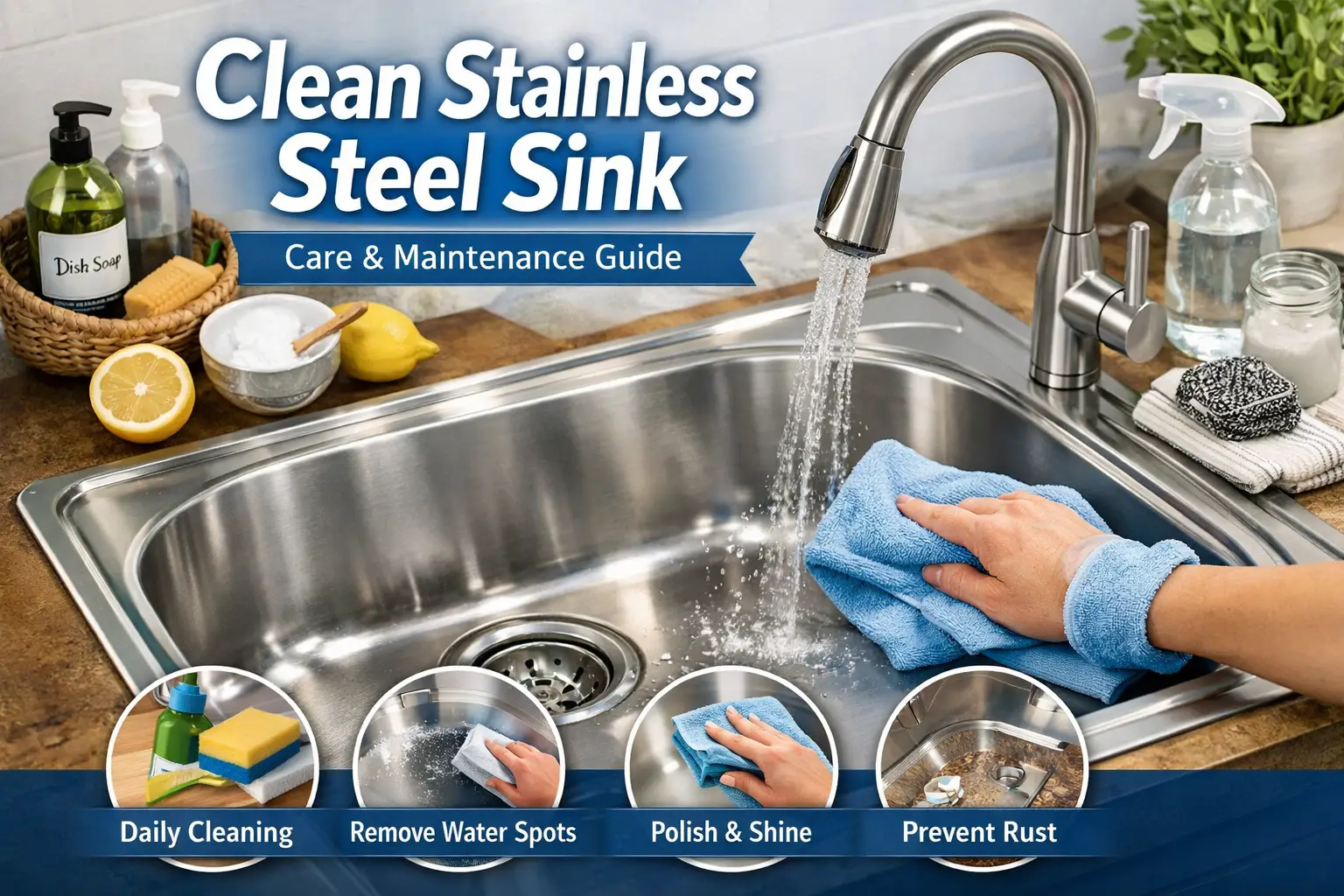
How to Clean and Maintain Stainless Steel Sinks (Ultimate Care Guide 2026)
A clean stainless steel sink does more than just look good, it sets the tone for your entire kitchen. Whether you’re cooking daily or just rinsing dishes, your sink is one of the most used surfaces in the home. And over time, even high-quality stainless steel can start to lose its shine.
The good news? Keeping it clean doesn’t require expensive products or complicated routines. With the right habits and a few simple techniques, you can keep your sink looking polished, hygienic, and like new for years.
This guide walks you through everything you need to know: from daily cleaning to removing stubborn stains and preventing long-term damage.
Why Stainless Steel Sink Care Really Matters
Stainless steel is popular for a reason—it’s durable, corrosion-resistant, and timeless in design. But “low maintenance” doesn’t mean “no maintenance.”
With daily use, your sink is constantly exposed to:
- Mineral deposits from hard water
- Grease, soap residue, and food particles
- Scratches from utensils and cookware
- Rust stains caused by contact with other metals
If left unchecked, these small issues build up quickly.
Taking a few minutes each day to care for your sink helps you:
- Maintain a consistent shine
- Reduce bacteria and odors
- Prevent staining and surface damage
- Extend the lifespan of the material
In short, it’s about protecting both appearance and performance.
Daily Cleaning Routine (Simple but Effective)
If there’s one habit that makes the biggest difference, it’s this: clean a little, often.
Here’s a practical routine you can stick to:
1. Rinse after every use
Even a quick rinse helps prevent soap scum and food buildup from settling.
2. Clean with the grain
Stainless steel has a natural grain—always wipe in that direction to avoid micro-scratches.
3. Use gentle tools
Skip steel wool or harsh scrubbers. A soft sponge or microfiber cloth works best.
4. Dry the surface
This step is often overlooked, but it’s key. Drying your sink prevents water spots and keeps it looking polished.
Quick answer:
To clean a stainless steel sink daily, rinse after use, clean with mild soap along the grain, and dry immediately.
Weekly Deep Cleaning (Restore the Shine)
Even with daily care, your sink will benefit from a deeper clean once a week.
This doesn’t need to be complicated:
- Sprinkle baking soda across the surface
- Gently scrub with a damp sponge (following the grain)
- Rinse with warm water
- Dry and buff with a clean cloth
If you want that extra “like-new” finish, a small amount of club soda can help enhance the shine. It’s a simple trick, but surprisingly effective.
How to Remove Water Spots (The Most Common Issue)
Water spots are probably the number one complaint—and they’re especially common in areas with hard water.
They’re caused by minerals left behind when water evaporates.
Easy fix:
- Spray white vinegar or lemon juice over the sink
- Let it sit for about 10 minutes
- Lightly scrub with a soft cloth or sponge
- Rinse and dry thoroughly
The mild acidity breaks down mineral deposits without damaging the steel.
How to Remove Limescale (Stubborn Mineral Build-Up)
Limescale is basically a more stubborn version of water spots—and it tends to build up around faucets and edges.
Here’s a reliable method:
- Soak paper towels in white vinegar
- Lay them over the affected areas
- Leave for 20–30 minutes
- Wipe away with a sponge
- Rinse and dry
For tougher buildup, you can follow up with a light baking soda scrub. Realistically, limescale will come back over time. The goal isn’t to eliminate it forever—but to manage it early so it never becomes a major problem.
How to Remove Fingerprints (Quick Fix)
Fingerprints are harmless, but they can make an otherwise clean sink look messy—especially under certain lighting.
Instead of over-cleaning the entire sink, do this:
- Apply a small amount of glass cleaner to a microfiber cloth
- Wipe the affected area in circular motions
- Buff dry
It’s fast, simple, and restores that clean, uniform finish instantly.
How to Remove Rust Spots Safely
Yes—stainless steel can still develop rust. But in most cases, it’s not the sink itself—it’s contamination from other metal objects.
The fix is straightforward:
- Mix baking soda with a little water to form a paste
- Apply it to the rust spot
- Let it sit for 5 minutes
- Gently scrub with a soft brush or cloth
- Rinse and dry
Stainless steel naturally forms a protective chromium layer, so once cleaned, the surface can “heal” and return to its original condition.
What to Avoid (This Is Where Most People Go Wrong)
A lot of sink damage comes from well-intentioned mistakes.
Here are the big ones to avoid:
- Scrubbing against the grain
- Using steel wool or abrasive pads
- Using bleach or chlorine-based cleaners
- Letting water sit on the surface
- Leaving metal items (like pans or cans) in the sink
- Ignoring stains until they set
These habits can lead to scratches, discoloration, and even corrosion over time.
Monthly Maintenance (Don’t Forget the Drain)
Cleaning the surface is only part of the story. Your sink system also includes the drain—and that needs attention too.
Once a month:
- Use a drain cleaner or natural alternative
- Flush with hot (or boiling) water
- Clear buildup before it becomes a blockage
This helps prevent odors, improves drainage, and keeps your sink functioning properly.
Final Thoughts
A clean stainless steel sink isn’t about perfection—it’s about consistency.
You don’t need a long checklist or expensive products. Just a few smart habits:
- Rinse and dry daily
- Deep clean weekly
- Maintain the drain monthly
Do that, and your sink will stay clean, polished, and reliable for years—without ever feeling like a chore.
FAQ
- How do you keep a stainless steel sink shiny?
Clean regularly with mild soap, dry after each use, and polish with a microfiber cloth. - What is the best homemade cleaner for stainless steel sinks?
A combination of baking soda and vinegar works well for removing stains and restoring shine. - Can vinegar damage stainless steel?
No, when used properly and rinsed off, vinegar is safe and effective for cleaning. - Why does my stainless steel sink look dull?
Dullness is usually caused by mineral buildup, scratches, or residue—regular cleaning and drying will restore shine.