Advanced Semiconductor Processes Explained | Wafer Guide
Most people don’t think much about semiconductors, but they’re behind almost everything we use today. Phones, laptops, cars, even home appliances all depend on tiny IC chips working in the background.
What many don’t see is how complex the manufacturing process really is. Advanced semiconductor processes involve multiple stages, from wafer fabrication to dicing and packaging. Each step has to be tightly controlled, because even small variations can affect performance.
Taiwan has built a strong reputation in this space. With companies like TSMC leading the industry, the entire supply chain has developed around precision, reliability, and consistency.

Wafer Frames in Advanced Semiconductor Processes
One component that often gets overlooked is the wafer frame. It may seem simple, but in advanced semiconductor processes, wafer frames play a critical role. They are used to support wafers during grinding and dicing, when the wafer becomes extremely thin and fragile.
At this stage, even a slight bend or instability can lead to defects. That’s why wafer frames need to be manufactured with strict control over flatness, strength, and dimensional accuracy.
Stainless steel is commonly used because of its rigidity and durability. But material alone isn’t enough. The way the frame is finished and processed also matters.
At YJ Stainless, wafer frames are designed to meet different equipment requirements. Custom options include:
- Polished or matte surface finishes
- Laser engraving for traceability
- Groove and notch processing
- Tight tolerance control
Each frame is also tested under tension to make sure it performs reliably during steps like Blue Tape removal.

Wafer Carriers Supporting Advanced Semiconductor Processes
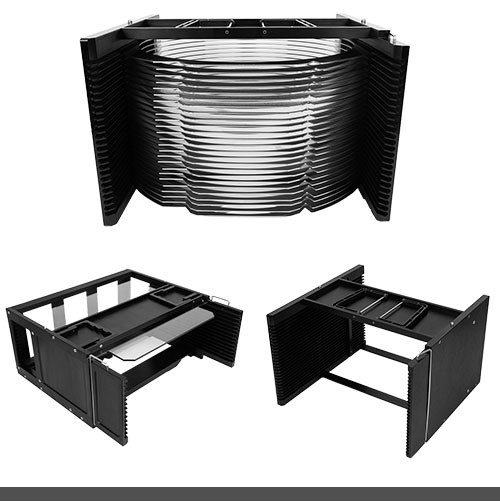
While wafer frames hold wafers in place, wafer carriers are responsible for moving and protecting them throughout the production line. In advanced semiconductor processes, this is just as important.
Wafers need to be protected from contamination, static, and physical damage as they move between stages. Depending on the process, carriers may also need to handle heat and chemical exposure. That’s why both material and design need to be carefully considered.
YJ Stainless offers wafer frame carriers made from lightweight aluminum, such as 6061 and 6063, with anodized surfaces to improve durability and reduce electrostatic risks. They are available in standard sizes like 6-inch, 8-inch, and 12-inch, making them compatible with a wide range of semiconductor equipment.
Precision Requirements in Advanced Semiconductor Processes
When it comes to advanced semiconductor processes, small details make a big difference. A slight variation in surface condition or dimensional accuracy can lead to yield loss or defects. That’s why consistency is so important across every component involved in the process.
Manufacturers in this field tend to focus on long-term refinement. It’s not about making big changes overnight, but about improving stability, repeatability, and precision over time.
Looking Ahead
As semiconductor technology continues to evolve, the requirements will only become more demanding. Chips are getting smaller, and tolerances are getting tighter.
Even though wafer frames and carriers are not the most visible parts of the process, they remain essential. Without them, many advanced semiconductor processes would not be possible.
And in many ways, that’s what defines this industry. The smallest components often play the biggest role.
Work With a Reliable Wafer Frame Manufacturer
If you’re working in semiconductor manufacturing, you already know how important consistency and precision are.
At YJ Stainless, we focus on producing high-quality wafer frames and carriers that meet real production requirements, not just specifications on paper. From standard sizes to fully customized designs, everything is built with stability and long-term use in mind.
If you’re looking for a supplier who understands both stainless steel processing and semiconductor-level precision, it may be worth having a conversation.
Explore more about our wafer frame and carrier solutions, or reach out to discuss your specific requirements.
FAQs
- What are advanced semiconductor processes?
They refer to the manufacturing steps used to turn silicon wafers into integrated circuits, including fabrication, dicing, and packaging. - Why are wafer frames important in advanced semiconductor processes?
They stabilize wafers during cutting and handling, helping prevent damage and improve yield. - What do wafer carriers do?
They transport and protect wafers between different stages while reducing contamination and static risks.