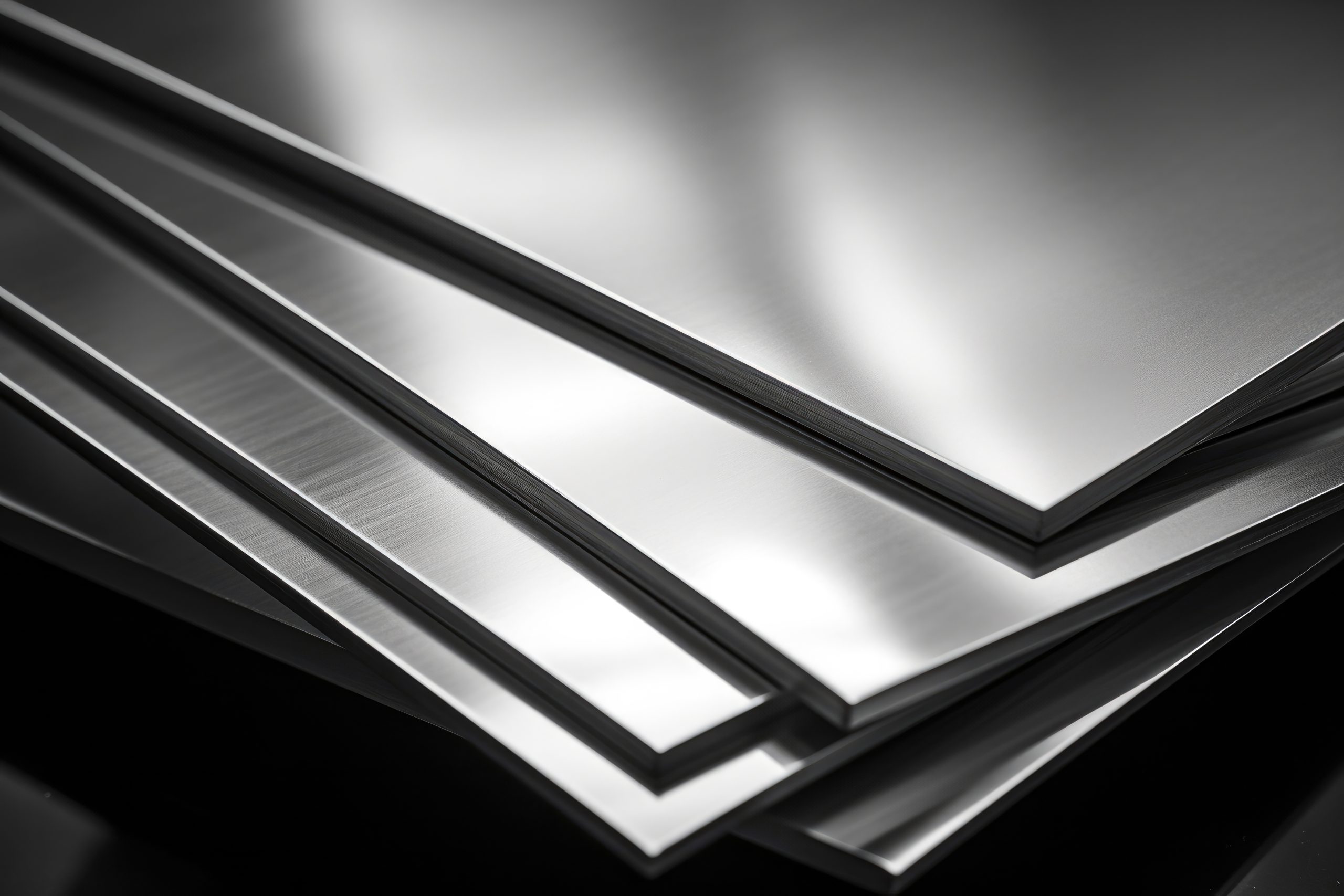
Identification of Stainless Steel Sheets
Understanding the Difference Between 200, 300, and 400 Series Stainless Steel
Not all stainless steel sheets are the same, even if they look similar at first glance. In reality, different series of stainless steel have very different compositions, properties, and uses.
According to industry standards, stainless steel is commonly divided into three main categories: 200 series, 300 series, and 400 series. Each one differs in corrosion resistance, strength, and application.
Understanding these differences becomes especially important when the material is used in precision industries like semiconductor manufacturing, where even small variations can affect performance.
SUS 200 Series: Low Cost but Higher Risk
The 200 series stainless steel is known for its lower cost. This is mainly because it uses manganese (Mn) to partially replace nickel (Ni), which reduces production expenses.
Typical characteristics include:
- Higher manganese content
- Lower nickel content
- Lower ductility and formability
- Generally non-magnetic
Originally, 200 series stainless steel was used in industrial structures like door frames, beams, and construction components.
However, problems arise when this material is used in cookware or food-related applications. To improve its formability, additional manganese may be added. Under certain conditions, such as exposure to heat or acidic environments, excessive manganese may release substances that are not ideal for long-term human contact.
Because of this, the 200 series is generally not recommended for kitchenware or food-contact products.
SUS 300 Series: The Standard for Quality and Safety
When it comes to stainless steel sheets used in daily life, the 300 series, especially SUS 304, is the most widely accepted standard.
304 Stainless Steel (18-8)
304 stainless steel contains approximately:
- 18% chromium
- 8–10% nickel
This combination provides:
- Excellent corrosion resistance
- Good ductility and formability
- Strong resistance to oxidation
That’s why 304 is commonly used in:
- Kitchen equipment
- Food containers
- Stainless steel sinks and appliances
316 Stainless Steel (Higher Grade Option)
316 stainless steel takes it a step further by adding molybdenum, which improves:
- Corrosion resistance in harsh environments
- Chemical and acid resistance
- Long-term durability
Because of this, 316 is often used in:
- Medical equipment
- Pharmaceutical applications
- High-end kitchenware
In most everyday scenarios, 304 is more than sufficient. 316 is typically chosen when the environment is more demanding.
SUS 400 Series: Magnetic but Less Corrosion Resistant
The 400 series, such as 430 stainless steel, contains chromium but little to no nickel.
Key characteristics:
- Magnetic
- Lower corrosion resistance
- More prone to oxidation over time
While it is used in appliances and some cookware, it requires proper maintenance to avoid rust.
Why 420 Stainless Steel Is Used in Wafer Frames
In semiconductor applications, the requirements are different. Components like wafer frames (dicing rings) require:
- High rigidity
- Dimensional stability
- Resistance to deformation under tension
This is where 420 stainless steel is often used. Compared to 304 or 316, it offers higher hardness and better structural stability, making it suitable for precision applications.
At YJ Stainless, wafer frames are manufactured using carefully selected stainless steel materials to meet semiconductor-level requirements. These frames are designed for processes such as wafer dicing and handling, where even slight variations can impact yield.
Key features include:
- High flatness and tight tolerance control
- Polished or matte surface finishes
- Laser engraving for traceability
- Groove and notch customization
- Tension-tested performance during Blue Tape removal
These wafer frames are widely used in semiconductor production environments, where consistency and reliability are essential.

How to Identify Stainless Steel Sheets in Real Applications
When it comes to the identification of stainless steel sheets, a few practical methods can help you quickly narrow down the material type and avoid costly mistakes.
1. Check Grade and Markings
Start with the basics. Look for material labels such as SUS 304, SUS 316, or SUS 430.
These markings usually give you the most direct indication of the stainless steel grade.
2. Use a Magnet (Quick Test)
A simple magnet test can give you a rough idea:
- Non-magnetic → typically 300 series (e.g., 304, 316)
- Magnetic → usually 400 series (e.g., 430)
Keep in mind this is only a quick reference, not a definitive test.
3. Consider the Application
In many cases, the intended use tells you a lot about the material:
- Kitchen equipment → usually 304 or 316
- Structural or low-cost applications → often 200 series
Precision semiconductor components (e.g., wafer frames) → commonly 420
4. Verify Certifications
For critical applications, always check:
- Material certificates (MTC)
- Supplier documentation
This is still the most reliable way to confirm stainless steel composition and quality.
Why Material Selection Matters in Precision Industries
In everyday use, the difference between stainless steel grades might not seem obvious. But in advanced industries like semiconductor manufacturing, those differences become critical.
Take wafer frames as an example. These components must remain stable under tension and during handling processes. If the material lacks the right strength or consistency, it can directly affect yield and product quality.
That’s why manufacturers like YJ Stainless focus not only on the material itself, but also on processing accuracy, surface finishing, and performance testing.
Final Thoughts
Identifying stainless steel sheets is not just about appearance. It comes down to understanding a few key factors:
- Material composition
- Mechanical properties
- Application requirements
From general stainless steel products to high-precision wafer frame manufacturing, choosing the right material is what ensures long-term reliability.
Looking for Precision Wafer Frame Solutions?
If your application involves semiconductor processing, material selection becomes even more important.
YJ Stainless provides custom wafer frames built for real production environments, combining stainless steel expertise with precision manufacturing.
If you’re evaluating wafer frame options or have specific technical requirements, it may be worth taking a closer look at what YJ Stainless can offer.
Contact us now!