Sapphire Dicing: Will Your Existing Tape Frame Fit a New Wafer Size?
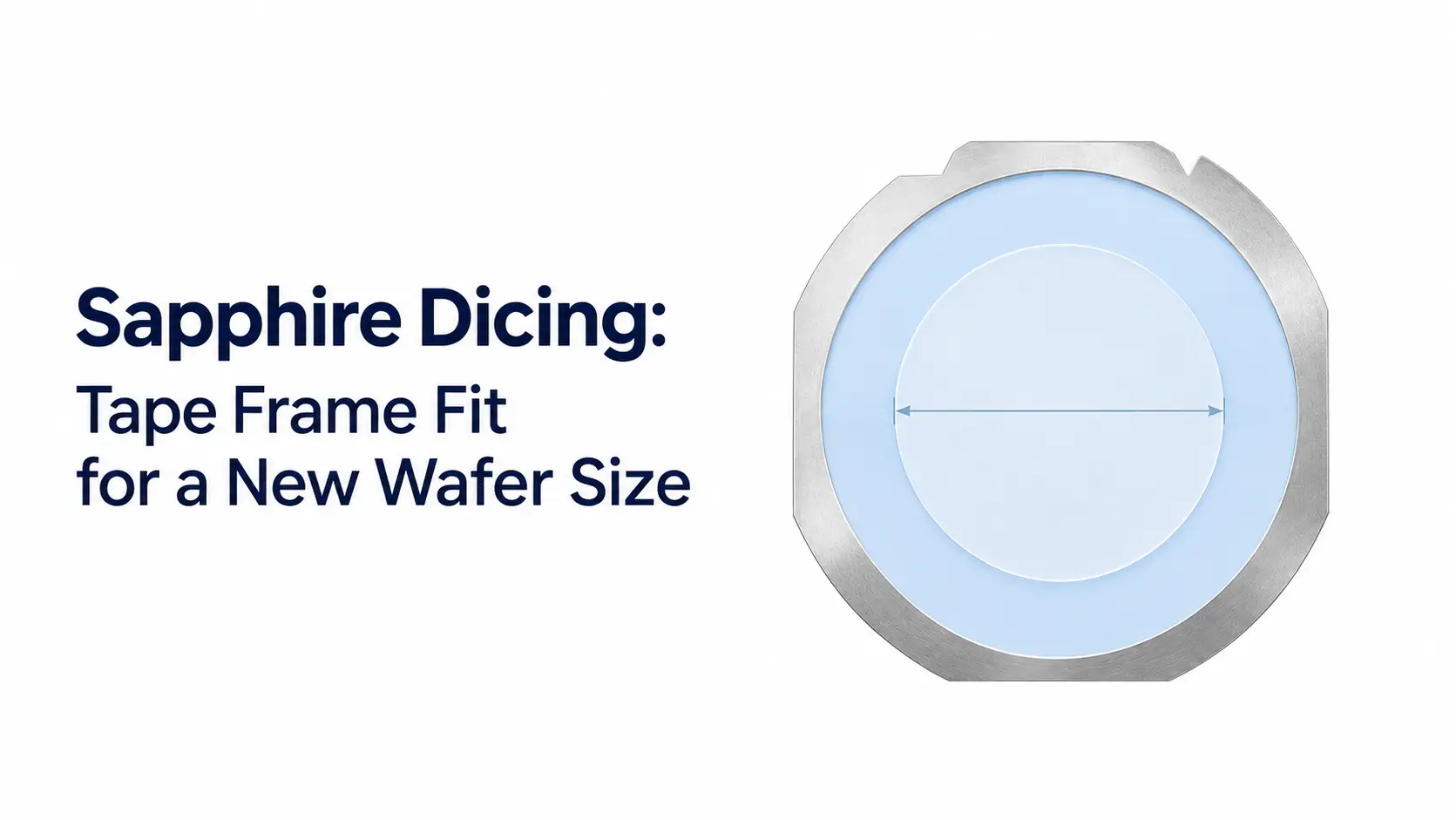
An existing tape frame may still work when a sapphire dicing line changes wafer size. The opening must provide enough usable tape area for the new wafer, and every station that handles the mounted assembly must accept the frame.
A larger wafer can fit inside the frame opening yet leave too little surrounding tape for the approved mounting layout. Comparing the new layout with the current frame drawing helps the equipment team decide whether the existing frame can stay in use and, if a change is needed, which dimensions to revise.
Which Tape Frame Dimensions Matter for Sapphire Dicing?
In a tape-mounted setup, the sapphire wafer adheres to tape spanning the frame opening. The opening determines the space available for the mounting layout. The outer profile, thickness, and locating features determine how the frame fits the equipment.
DISCO’s tape frame specifications list inner and outer dimensions for different frame sizes. Those dimensions give a buyer a starting point for comparing frames. For a replacement order, the approved drawing or confirmed part number identifies the component used on the line.
| Where the frame is used | What to compare | What the comparison tells you |
|---|---|---|
| Wafer mounting | Wafer layout, frame opening, and usable tape area required by the mounting process | Whether the wafer can sit in its specified position with sufficient tape around it. |
| Positioning and loading | Frame outline, thickness, and locating features against the installed mounter and loader configuration | Whether each machine can receive and position the frame. |
| Downstream handling | Frame requirements at any cassette, expander, or pickup station that receives the mounted assembly | Whether the same frame can continue through the planned sequence. |
How the Installed Mounter Configuration Affects Frame Fit
The POWATEC P-200 wafer mounter specifications give a practical example. The P-200 accepts a six-inch DTF 2-6-1 frame using an insert ring. It also uses interchangeable positioning pins for different frame types.
This matters when two production lines request frames for the same nominal wafer size. Even if both lines use a P-200, purchasing may need the installed ring and pin configuration, or the approved frame reference from each line, to identify the correct replacement.
Can the Existing Frame Stay in Use When the Wafer Size Changes?
Two questions guide the review. Does the new mounting layout fit the existing opening? Can every station in the planned route accept the frame?
If both checks pass, the equipment team may approve the existing design for the new wafer size. If more tape area is needed, a drawing with the proposed opening marked shows how much the opening would change, how much material would remain around it, and which loading features must stay in place.
A station change can introduce a separate requirement. For example, a line may retain its current loader but add an expander with a different frame interface. In that case, the revised drawing needs to account for both the wafer opening and the expander interface. Reviewing them together helps the team identify a conflict before ordering the frame.
For a like-for-like replacement, purchasing needs to know which frame revision is approved on that line. A photograph can help identify the frame. The approved drawing provides the dimensions, tolerances, and feature locations needed for a manufacturing review.
How YJ Stainless Supports Custom and Replacement Tape Frames
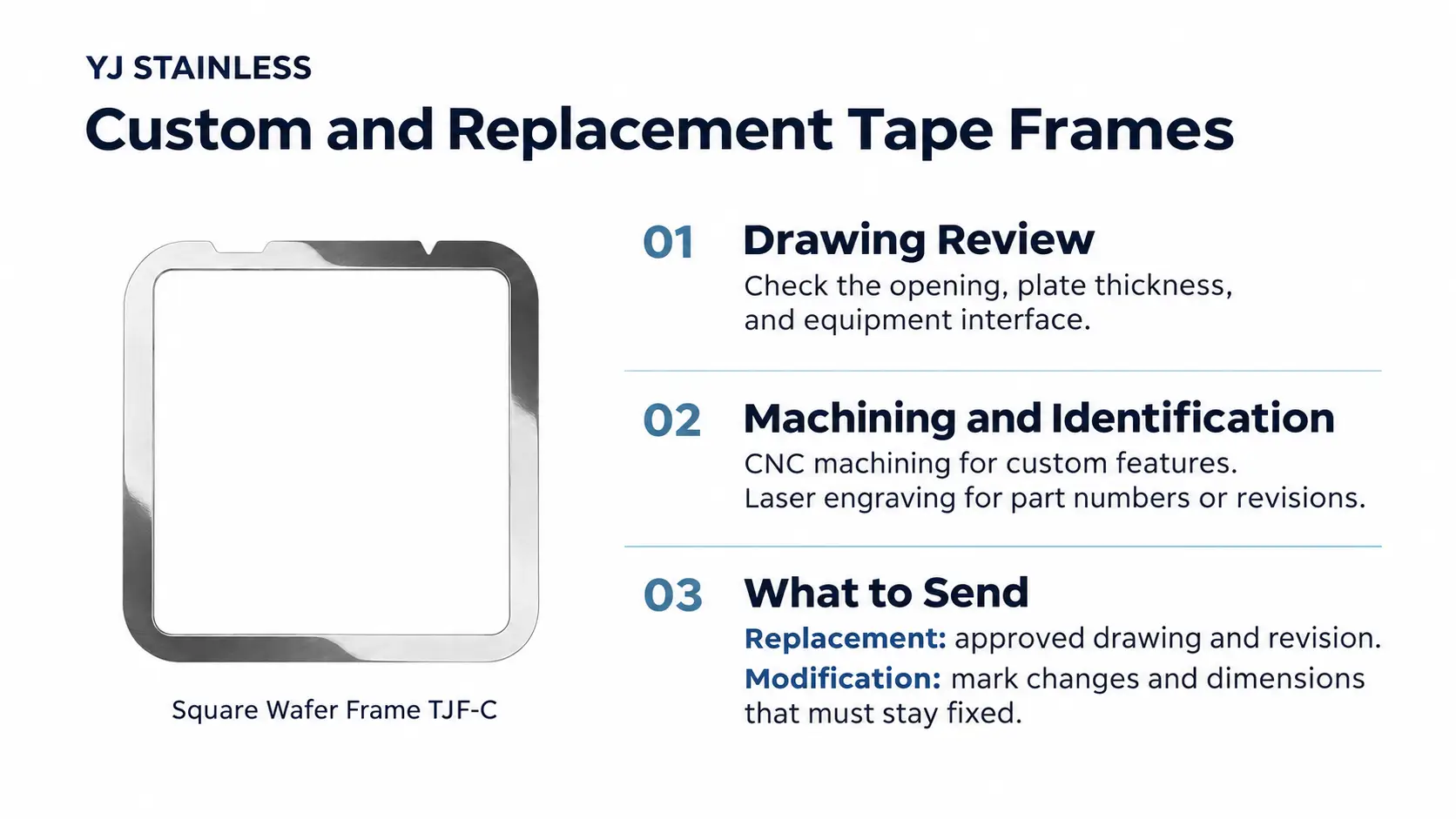
At YJ Stainless, we manufacture stainless steel frames for new equipment and replacement applications. Our Square Wafer Frame TJF-C is one example of a made-to-order design with customizable dimensions and plate thickness. For a sapphire dicing line, we review the opening and equipment-facing features against the customer’s drawing.
Our frame customization services include CNC machining and laser engraving for identification. If two approved frames look alike but have different openings, an engraved part number or revision helps operators select the correct one during setup.
For a replacement, you can send us the approved frame drawing and revision. For a modified frame, a marked drawing that identifies the proposed change and the dimensions that must stay fixed gives us a clear basis for reviewing the request.
Conclusion
Yes, the existing tape frame can stay in use if the new wafer layout leaves enough usable tape area and every station on the line accepts the mounted assembly. If either check reveals a mismatch, the drawing should identify the feature that needs to change and the dimensions that must stay fixed. Engineering then has a specific change to verify, and purchasing has a defined revision to order once it is approved.
FAQs
1. Does sapphire dicing require a dedicated tape frame?
An existing tape frame may be suitable. Its opening must accommodate the approved mounting layout, and its outer profile and locating features must fit the equipment that handles it. A change in substrate material alone does not establish a need for a different frame.
2. Can two frames for the same wafer diameter fit different machines?
Yes. Frames associated with the same nominal wafer size can have different outer profiles or locating features. The approved frame reference or equipment interface drawing helps determine whether they are interchangeable.
3. What if several sapphire wafer sizes share one production line?
Each mounting layout can be checked against the usable area of the proposed frame. If the line uses several similar frames, recording the approved part number and revision for each setup helps operators select the right one.
4. Can a worn frame serve as a reference for a replacement?
A sample can help identify the outline and machined features. An approved drawing or verified specification helps distinguish the intended dimensions from wear or deformation, particularly where the equipment locates the frame.
5. What information helps YJ Stainless assess a modified opening?
The current drawing, proposed opening dimensions, material, thickness, and critical tolerances provide a starting point. It also helps to identify the outer dimensions and locating features already approved for the equipment.