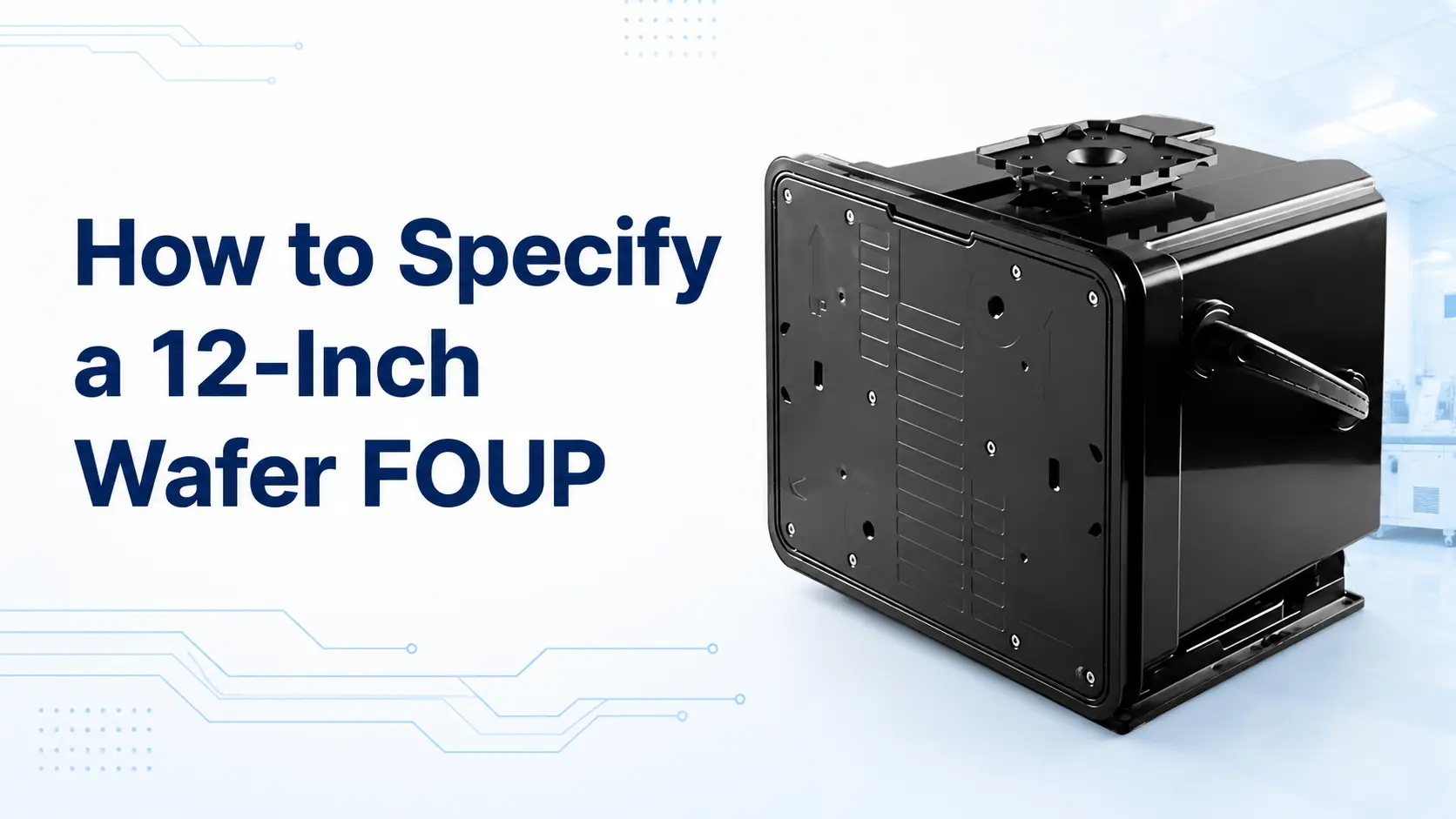
How to Specify a 12-Inch Wafer FOUP: Slot Capacity, PC ESD Material and Custom Requirements
If you already know you need a 12-inch Wafer FOUP, the next step is to define the specifications clearly before requesting a quote.
For a full introduction, you can first read our Wafer FOUP Guide for 12-Inch Wafer Handling. This article focuses on how to specify a 12-inch Wafer FOUP by wafer or frame size, slot capacity, slot pitch, material, cleanroom handling method and equipment interface.
A Wafer FOUP may be used for storage, transfer, inspection support, temporary holding or equipment-side handling. If the carrier does not match the workflow, loading, unloading or transfer may become difficult.
Start with the Actual Wafer Handling Process
Before choosing a Wafer FOUP, start with how the carrier will be used. A FOUP used only for temporary storage may not need the same design as one used for frequent cleanroom transfer or equipment-side handling.
Confirm these points first:
- Will the carrier be used for storage, transfer or both?
- Will it move between cleanroom areas?
- Will operators load and unload wafers manually?
- Will it be used near inspection or process equipment?
- Does the process require RFID tracking?
- Will it hold bare wafers, wafer frames or tape frames?
These details affect the carrier size, slot design, material, interface and customization needs.
Confirm Wafer or Frame Compatibility
A 12-inch Wafer FOUP should be selected based on the actual object being handled. Some processes handle bare wafers. Others may require wafer frame or tape frame support.
Before confirming the design, check:
- Wafer size
- Frame size, if applicable
- Internal clearance
- Slot alignment
- Loading direction and station compatibility
- Manual or equipment-side handling method
A carrier that fits a bare wafer may not automatically fit a framed wafer or tape frame. If the same carrier needs to support more than one handling requirement, the internal slot design should be reviewed carefully.
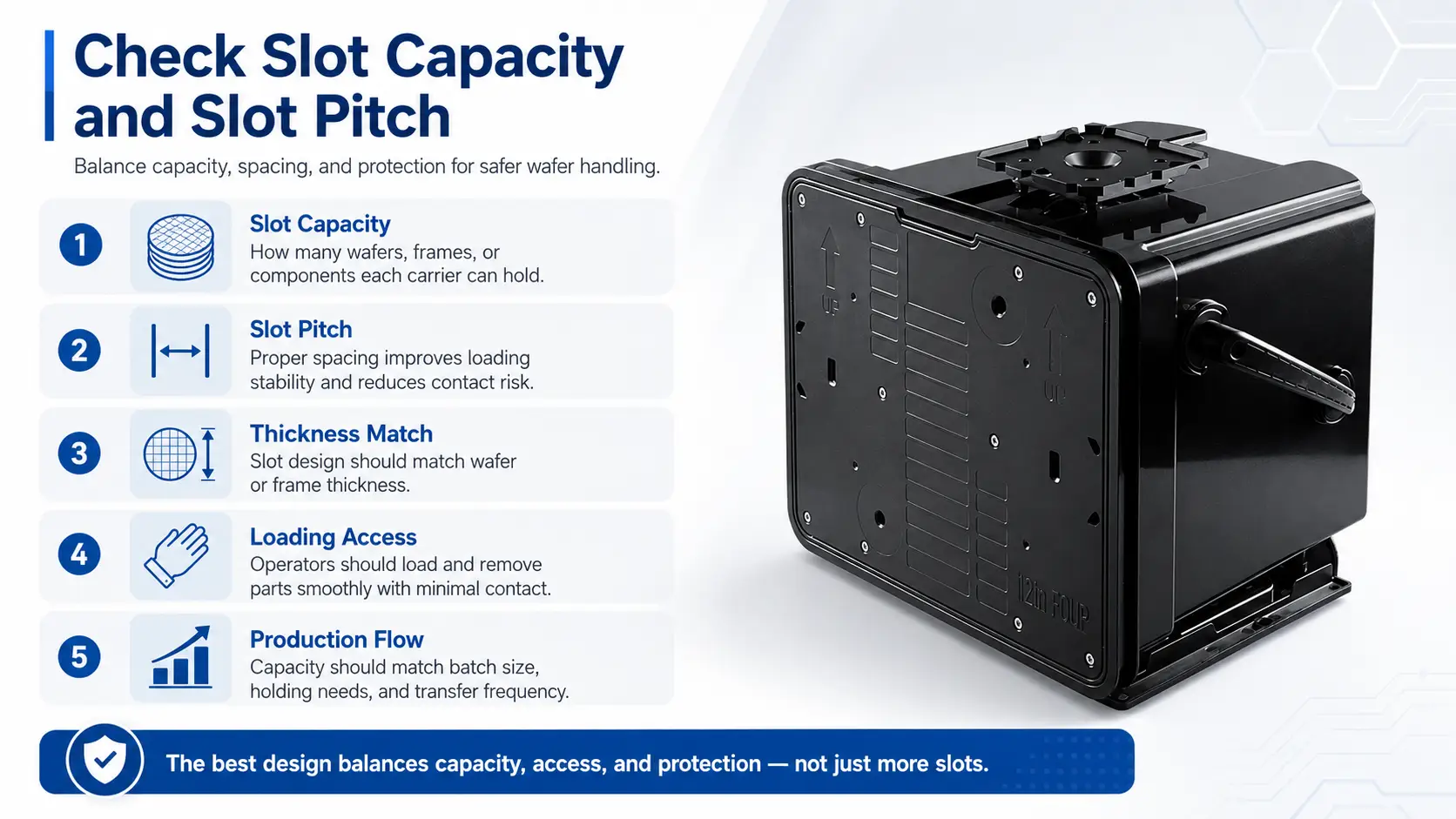
Check Slot Capacity and Slot Pitch
Slot capacity defines how many wafers or frames can be stored in one carrier. A 25-slot Wafer FOUP is commonly used when organized multi-slot handling is required.
However, higher capacity is not always the safest choice if the spacing does not match the object being handled. Slot pitch and spacing affect loading, unloading and contact risk.
When reviewing slot design, consider:
- Slot capacity
Defines how many wafers, frames or components can be handled per carrier. - Slot pitch
Affects spacing between wafers or frames and influences loading stability. - Wafer or frame thickness
The slot design should match the actual thickness of the object being stored. - Loading and unloading access
Operators should be able to place and remove wafers or frames without excessive contact. - Production flow
Capacity should match batch size, temporary holding needs and transfer frequency.
The goal is not only to fit more pieces. The carrier should balance capacity, access and protection.
Choose PC ESD Material for Semiconductor Handling
Material selection matters because semiconductor wafers and related components may be sensitive to static discharge. For this reason, PC ESD material is often used for wafer carriers that require ESD-safe handling.
PC ESD material may be suitable when the process requires:
- ESD-safe wafer handling
- Cleanroom-compatible carrier design
- Durable material for repeated use
- Stable handling during transfer
- Protection for semiconductor wafers or components
The material should fit the cleanroom condition, handling frequency and ESD control requirements. If the carrier will be moved often between process areas, durability and handling stability should also be considered.
Review Front-Opening Access and Handling Direction
A front-opening structure is useful when wafers need to be accessed from the front during cleanroom handling or process transfer. It can make loading and unloading easier, especially near equipment, inspection stations or cleanroom work areas.
Before confirming the design, check:
- Front-opening access direction
- Door or cover clearance
- Operator handling space
- Loading and unloading workflow
- Process station compatibility
- Equipment-side handling requirements
The opening structure should match how the carrier is actually used. If operators need frequent access, the design should reduce unnecessary handling and make loading more stable.
Consider RFID Support for Carrier Tracking
RFID support is useful when wafer carriers need to be identified, tracked or managed during production. For cleanroom logistics, carrier tracking can help improve lot control, inventory management and process visibility.
RFID may be helpful when the process requires:
- Carrier identification
- Wafer lot tracking
- Production flow management
- Cleanroom logistics control
- Reduced manual labeling
- Better traceability between process steps
RFID is not required for every Wafer FOUP, but it is worth considering if the carrier is part of a larger production tracking system.
Confirm Cleanroom and Equipment Interface Requirements
A 12-inch Wafer FOUP should match the handling environment, not just the wafer size. Cleanroom conditions, transfer method and equipment interface can all affect the final design.
Important items to confirm include:
- Cleanroom use condition
- Equipment interface requirement
- Transfer method
- Handling station design
- Carrier loading direction
- ESD control requirement
- Manual or automated handling
If the carrier must work with existing tools or handling stations, the interface should be reviewed before production. This can reduce mismatch issues after delivery.
Decide Whether Custom Dimensions or Slot Design Are Needed
A standard Wafer FOUP may not fit every process. Some production flows require custom dimensions, different slot spacing, special frame support, RFID placement or equipment interface adjustment.
Custom design may be needed when:
- The wafer or frame size is not standard
- The slot pitch needs to match a specific handling method
- The carrier must fit existing cleanroom equipment
- RFID or tracking features are required
- The carrier is used for both wafer and frame handling
- The process requires a special loading direction or access method
For custom FOUP planning, it is better to confirm these details before ordering instead of adjusting the workflow after the carrier is made.
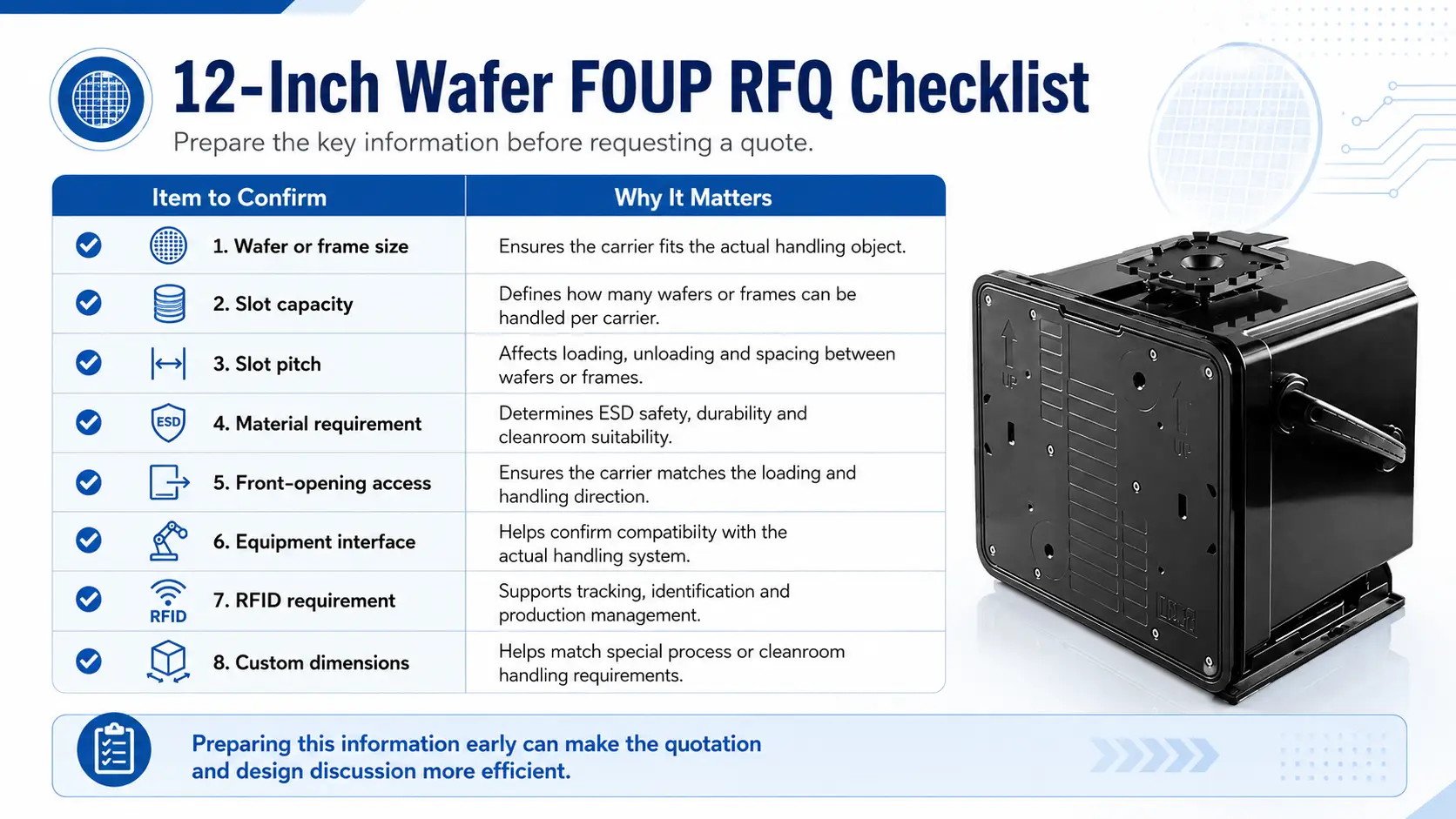
12-Inch Wafer FOUP RFQ Checklist
Before requesting a quote, prepare the key information needed for design review. This helps the supplier understand the handling requirement and recommend a suitable carrier structure.
| Item to Confirm | Why It Matters |
|---|---|
| Wafer or frame size | Ensures the carrier fits the actual handling object. |
| Slot capacity | Defines how many wafers or frames can be handled per carrier. |
| Slot pitch | Affects loading, unloading and spacing between wafers or frames. |
| Material requirement | Determines ESD safety, durability and cleanroom suitability. |
| Front-opening access | Ensures the carrier matches the loading and handling direction. |
| Equipment interface | Helps confirm compatibility with the actual handling system. |
| RFID requirement | Supports tracking, identification and production management. |
| Custom dimensions | Helps match special process or cleanroom handling requirements. |
Preparing this information early can make the quotation and design discussion more efficient.
YJ Stainless Custom 12-Inch Wafer FOUP Support
YJ Stainless provides 12-inch Wafer FOUP solutions for semiconductor wafer storage, cleanroom transfer and process handling.
The 12-Inch Wafer FOUP TJF-U12-25S is made with PC ESD material and designed with a 25-slot capacity. It is suitable for cleanroom wafer storage, wafer transport, production support and semiconductor handling applications.
YJ Stainless can also support custom planning based on actual process requirements, including:
- Slot quantity adjustment
- Slot pitch review
- Dimension modification
- RFID support
- Equipment interface compatibility
- Wafer or frame handling requirements
- Cleanroom and ESD application needs
If your process requires a specific slot structure, carrier size or tracking function, YJ Stainless can help evaluate the design based on your wafer handling workflow.
Conclusion
Specifying a 12-inch Wafer FOUP requires more than choosing a carrier by name. The design should match the wafer size, slot capacity, slot pitch, material, front-opening access, cleanroom condition and equipment interface used in the process.
For production, engineering and procurement teams, preparing these details before requesting a quote can reduce mismatch issues and make the carrier easier to use in cleanroom wafer handling.
If you need a 12-inch Wafer FOUP with PC ESD material, 25-slot capacity, RFID support or custom slot design, YJ Stainless can help review your wafer handling requirements and recommend a suitable carrier solution.
Contact us to discuss your 12-inch Wafer FOUP specifications, custom slot design and cleanroom handling requirements.
FAQ
1. What information is needed before ordering a 12-inch Wafer FOUP?
Before ordering, confirm wafer or frame size, slot capacity, slot pitch, material requirement, equipment interface, RFID needs and whether the carrier will be used for storage, transfer or process handling.
2. Is 25-slot capacity always suitable for 12-inch wafer handling?
Not always. A 25-slot Wafer FOUP is useful for organized multi-slot handling, but the right capacity depends on batch size, process flow, spacing requirement and whether the carrier is used for bare wafers or frames.
3. Why does slot pitch matter in a Wafer FOUP?
Slot pitch affects the spacing between wafers or frames. If the spacing is too narrow or does not match the actual handling object, loading, unloading and contact risk may become a problem.
4. When is PC ESD material recommended?
PC ESD material is recommended when the carrier is used for static-sensitive wafer or semiconductor component handling. It helps reduce electrostatic discharge risks during storage and transfer.
5. Can a 12-inch Wafer FOUP be customized?
Yes. A 12-inch Wafer FOUP can be customized by slot quantity, slot pitch, dimensions, RFID support, equipment interface and wafer or frame handling requirements.