
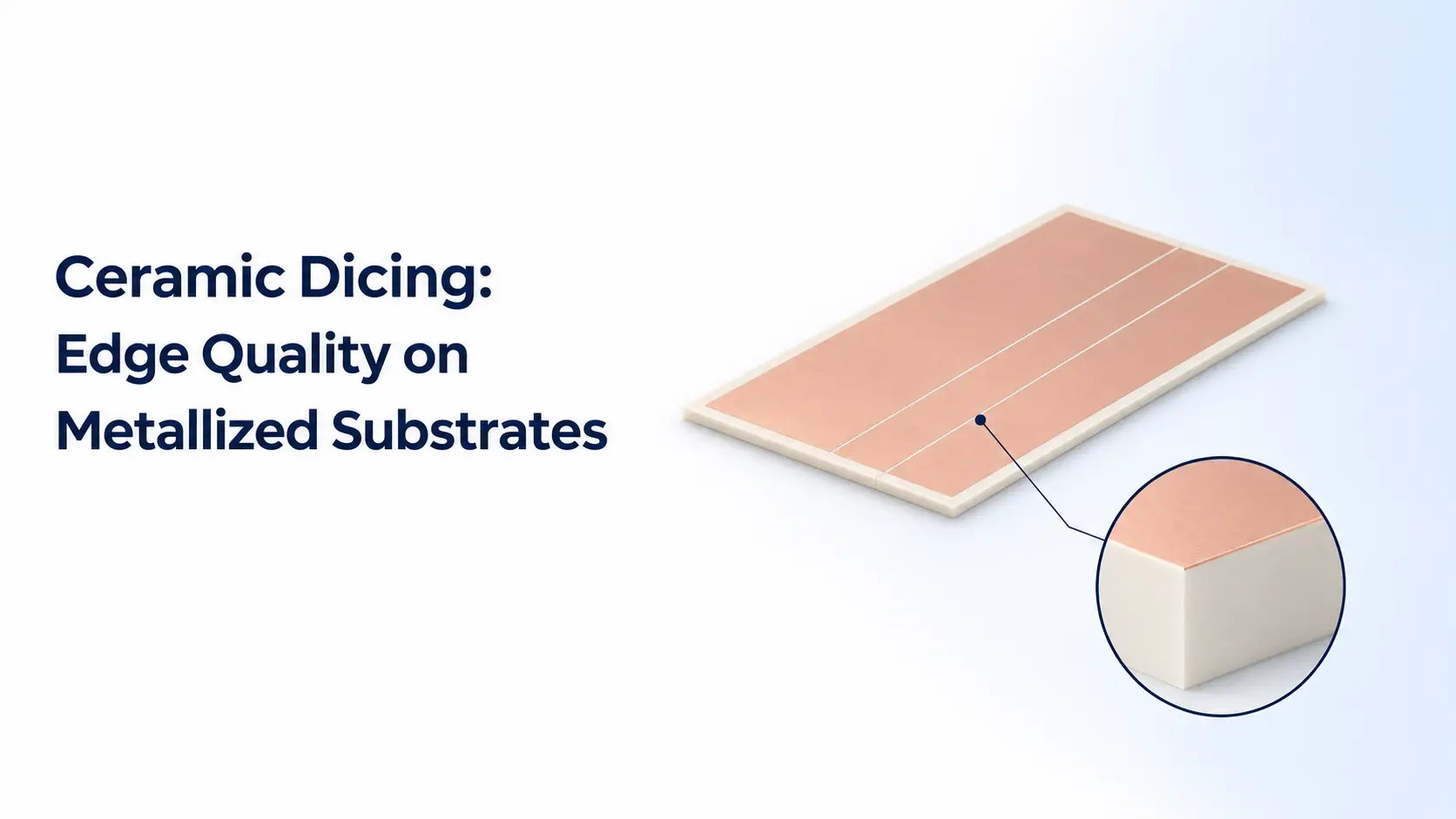
Ceramic Dicing of Metallized Substrates: What to Check at the Cut Edge
A diced ceramic part can meet its length and width tolerances and still have a lifted metal edge or a conductor too close to the cut. Which condition matters depends on where the blade passes. If the cut runs alongside a metal feature, the question is how much clearance remains. If it passes through metal, the question is whether the blade cut the layer cleanly and whether the metal remains attached at the edge.
A single cut can do both. A dicing street that looks clear from the front may cross a metal pattern on the back.
Where Is the Metal Relative to the Cut?
Comparing the front and back patterns with the planned cut helps identify which sections of a trial part deserve a closer look. Two details are particularly useful.
1. When the Cut Runs Beside a Metal Feature
Suppose a conductor runs parallel to one side of the part. The drawing specifies a minimum distance between that conductor and the finished edge. This distance is called metal pull-back. On the diced part, it is measured from the edge of the conductor to the adjacent ceramic edge. Measuring to the center of the planned cut would give a different value because the blade removes material across the width of the cut.
The Vishay UltraSource design guidelines give an example from thin-film circuit design. Their dicing guidance specifies metal pull-back on both the front and back of the substrate. For a particular component, its drawing defines which features need clearance and how much is acceptable.
2. When the Cut Passes Through Backside Metal
Where the blade crosses a backside metal layer, a front-side inspection can miss an incomplete cut in the metal. The ADT technical note on dicing hard and brittle materials describes one reason. In its example, soft backside metal deflected into the soft mounting tape as the blade passed. Some metal could remain uncut, and metal near the cut could peel away from the ceramic.
For a part with a similar construction, a trial using the intended mounting tape gives the process team a way to examine that specific risk. The most informative place to look is the backside edge where the blade crossed the metal pattern.
What to Inspect on a Trial Part
The cut layout identifies where to look. The drawing and inspection specification define what the finished part must meet.
| Location on the part | What to inspect |
|---|---|
| Ceramic edges and corners | Look for chips and visible cracks on both faces. Assess their size and location against the applicable acceptance criteria. |
| Where the blade crossed metal | Check whether the metal is fully cut and whether it has lifted or peeled away at the edge. |
| Where a conductor runs close to the edge | Measure the clearance between the designated metal feature and the finished edge. Compare it with the drawing. |
| Finished outline | Check length, width, and any other specified dimensions against their tolerances. |
Where the Metal Frame Fits in a Ceramic Dicing Setup
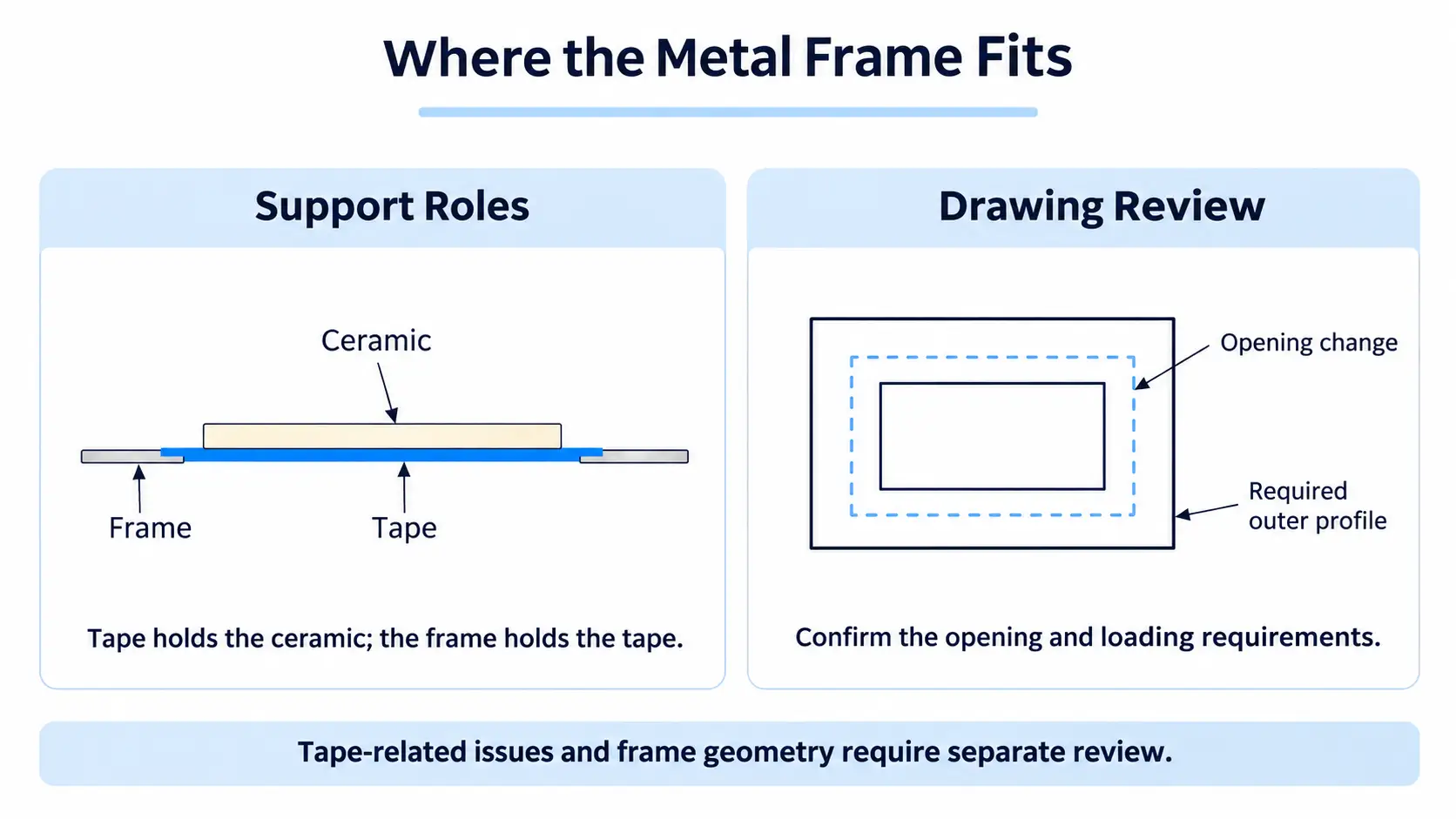
In a tape-mounted setup that uses a metal frame, the substrate sits on the tape and the frame holds the tape for loading into the equipment. In the ADT example above, the issue arose in the soft tape directly beneath the metal. A frame question arises under different circumstances, such as a change in the area available for mounting the substrate.
For example, a larger ceramic panel may require a wider frame opening while the machine still requires the same outer profile and loading features. Once your equipment team has defined those dimensions, we can review the drawing and assess how to manufacture the revised stainless steel frame.
At YJ Stainless, our frame customization services include custom CNC machining and laser engraving for identification. For a replacement frame, it helps to show the proposed opening on the existing drawing so we can see which dimensions are changing and which ones the machine still requires.
Conclusion
For metallized ceramic substrates, the most useful inspection plan follows the cut on both faces of the part. It identifies where to measure clearance, where to check for uncut or lifted metal, and which ceramic edges to examine for damage.
If you are still comparing cutting methods or mounting options, our ceramic dicing process overview explains how those choices fit into the overall workflow. If your equipment team has identified a change to the mounting frame, you can send us the frame drawing for a manufacturing review.
FAQs
1. Can a metallized ceramic substrate be diced after the metal has been applied?
Yes. For example, Vishay’s metallized plate specifications describe metallized ceramic plates that can be diced into smaller parts. On a patterned substrate, the position of the metal relative to the cut determines which features need inspection.
2. How does metal pull-back differ from kerf width?
Kerf width is the width of material removed by the cut. Metal pull-back is the clearance left on the finished part between its edge and a designated metal feature.
3. What makes a trial-cut photo useful?
Identify the face of the substrate and the location along the cut. If backside metal lifted at one corner, include the corner and the nearby metal pattern in the image. That makes it easier to compare the same location on a second trial part.
4. Does a change in metallization require a different frame?
A change in the metal pattern alone does not establish a need for a new frame. The frame becomes relevant if the revised part or mounting arrangement changes the required opening, usable tape area, or equipment interface.
5. What information helps YJ Stainless review a frame request?
An existing frame drawing, the proposed changes, material, thickness, and critical tolerances give us a starting point. For example, if the opening can change but the loading features must stay in the same positions, identifying those features on the drawing helps us assess the request.


