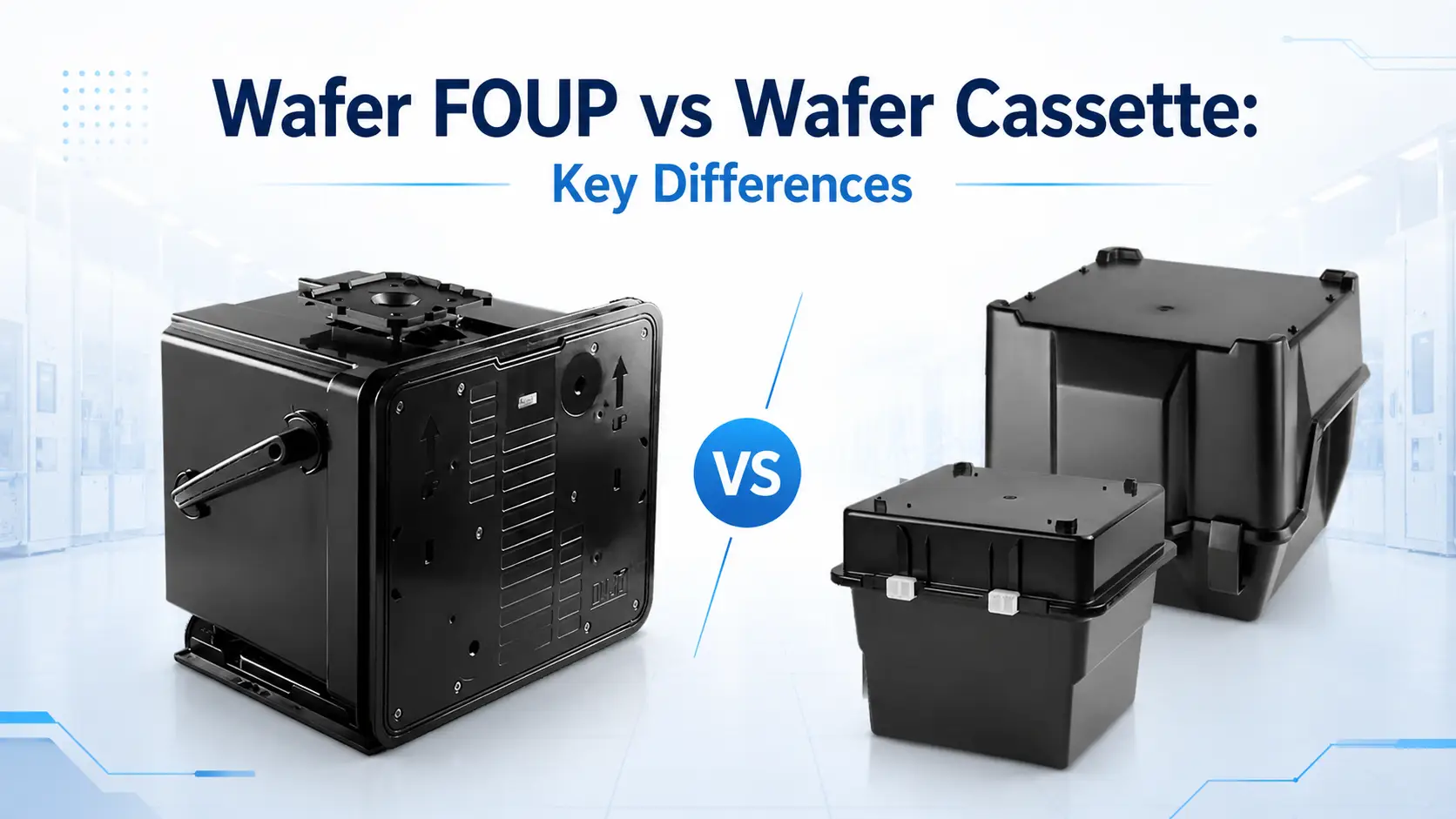
Wafer FOUP vs Wafer Cassette: Which Carrier Fits Your Wafer Handling Process?
Choosing between a Wafer FOUP and a wafer cassette is not only about wafer size. The right carrier depends on how wafers are stored, loaded, transferred and protected during the process.
A Wafer FOUP is usually a better fit when wafers need controlled cleanroom transfer, front-opening access and better protection during movement. A wafer cassette may be more suitable when the process needs direct wafer access, short-term holding or cassette-based equipment loading.
A carrier can look correct on paper, but still be difficult to use if it does not match the loading method, station layout or equipment interface. This article compares Wafer FOUPs and wafer cassettes from a practical wafer handling perspective.
If you are new to Wafer FOUPs, you can first read our Wafer FOUP Guide for 12-Inch Wafer Handling. If you are reviewing material requirements, you may also refer to our PC ESD Wafer FOUP Material Guide.
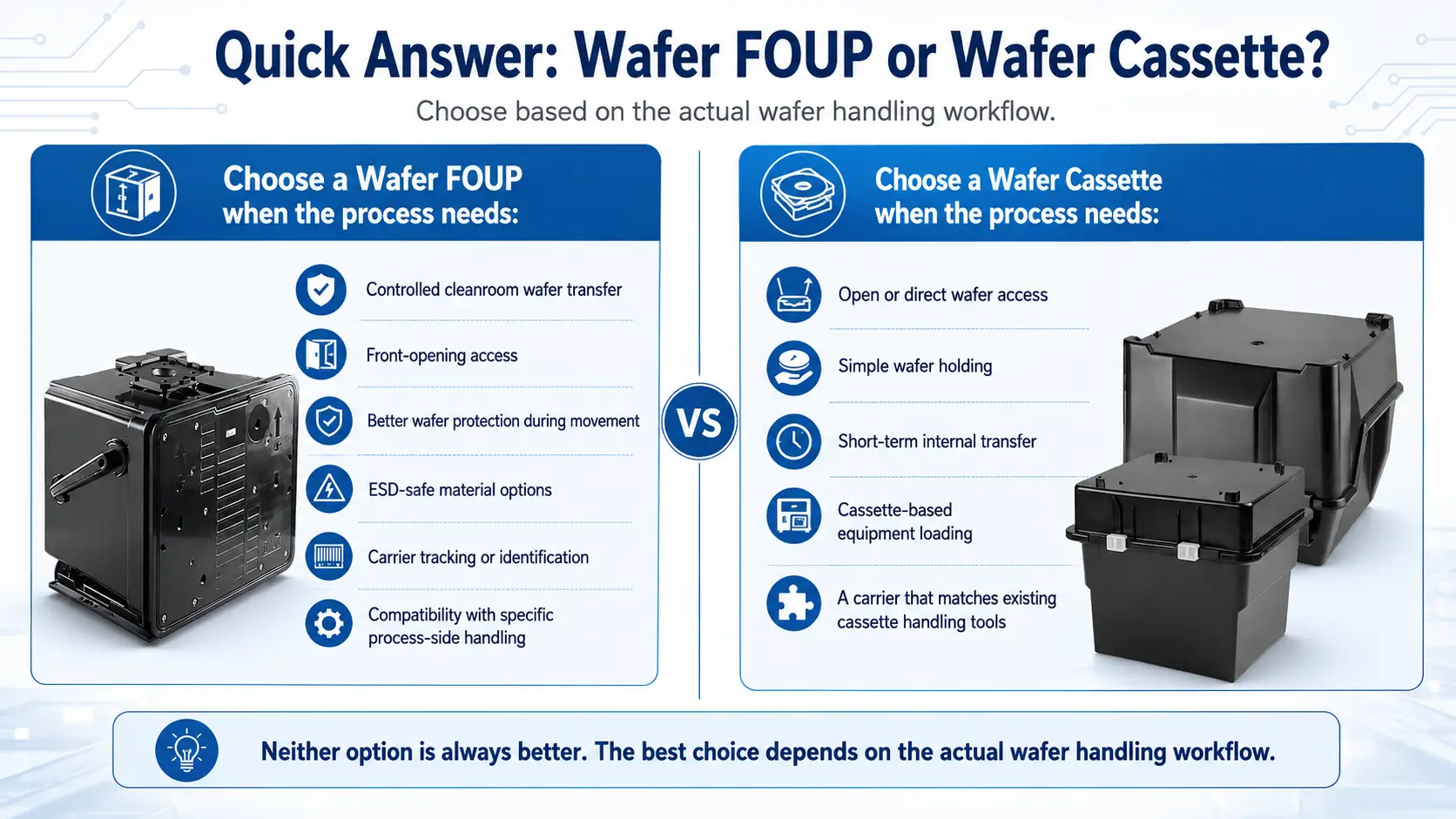
Quick Answer: Wafer FOUP or Wafer Cassette?
Choose a Wafer FOUP when the process needs:
- Controlled cleanroom wafer transfer
- Front-opening access
- Better wafer protection during movement
- ESD-safe material options
- Carrier tracking or identification
- Compatibility with specific process-side handling
Choose a wafer cassette when the process needs:
- Open or direct wafer access
- Simple wafer holding
- Short-term internal transfer
- Cassette-based equipment loading
- A carrier that matches existing cassette handling tools
Neither option is always better. The best choice depends on the actual wafer handling workflow.
Main Difference Between a Wafer FOUP and a Wafer Cassette
The main difference is the carrier structure and how wafers are accessed.
A Wafer FOUP is a front-opening wafer carrier. It is usually used when wafers need more controlled storage and transfer in cleanroom-related processes. Its structure helps reduce unnecessary wafer exposure during movement and handling.
A wafer cassette is a slot-based wafer holder. Depending on the design, it may be more open and easier for operators or equipment to access. It is often used for wafer holding, internal transfer or equipment loading.
In practical use, a Wafer FOUP is usually more suitable for controlled transfer and protected handling. A wafer cassette is often more suitable for direct access and cassette-based process flow.
Wafer FOUP vs Wafer Cassette Comparison
| Item | Wafer FOUP | Wafer Cassette |
|---|---|---|
| Carrier Structure | Front-opening carrier with a more protected structure | Slot-based wafer holder, often more open depending on design |
| Access Method | Front access for controlled loading and unloading | Open access or equipment-specific loading method |
| Protection Focus | Helps reduce unnecessary wafer exposure during transfer | Depends on cassette design and handling environment |
| Best Fit | Cleanroom transfer, process-side handling and controlled wafer movement | Wafer holding, direct access, internal transfer or cassette-based loading |
| Equipment Compatibility | Needs to match front-opening access, interface and handling station requirements | Needs to match cassette loading tools, slot pitch and equipment design |
| Selection Focus | Wafer size, slot capacity, material, ESD requirement and interface | Wafer size, slot pitch, loading method and tool compatibility |
This comparison should be used as a selection guide. The right carrier should match the process, not only the product name.
When a Wafer FOUP Is More Suitable
A Wafer FOUP is usually more suitable when wafers need controlled transfer and better protection during handling.
You may choose a Wafer FOUP when:
- The carrier moves between cleanroom areas
A FOUP-style carrier can help keep wafers more protected during movement between process zones, inspection areas or handling stations. - Front-opening access is required
If the process is designed around front access, a Wafer FOUP can make loading and unloading more consistent. - Wafers need reduced exposure during transfer
A more protected carrier structure can help reduce unnecessary exposure during movement and temporary holding. - ESD-safe material is required
If wafers or components are sensitive to static discharge, a PC ESD Wafer FOUP may be considered. - Carrier identification is needed
Some FOUP designs may support RFID or carrier identification for production management.
A Wafer FOUP is often selected when the carrier needs to support a controlled wafer handling flow, not only basic wafer storage.
When a Wafer Cassette Is More Suitable
A wafer cassette may be suitable when wafers need to be held, accessed or loaded into equipment more directly.
You may choose a wafer cassette when:
- The process needs direct wafer access
Operators or tools may need easier access to wafers during loading and unloading. - The equipment is designed for cassette loading
Some process tools or handling stations are built around cassette-based loading. In this case, using a FOUP may not be suitable unless the interface is reviewed. - The carrier is mainly used for short-term holding
For internal storage or simple transfer, a cassette may be practical. - The process does not require a more protected carrier
If wafer exposure risk is lower and the handling environment allows it, a cassette may be enough. - The cassette matches the wafer size and slot design
The cassette still needs proper wafer support, slot pitch and loading compatibility.
A wafer cassette can be simple and efficient, but it should still match the wafer size, equipment and handling method.
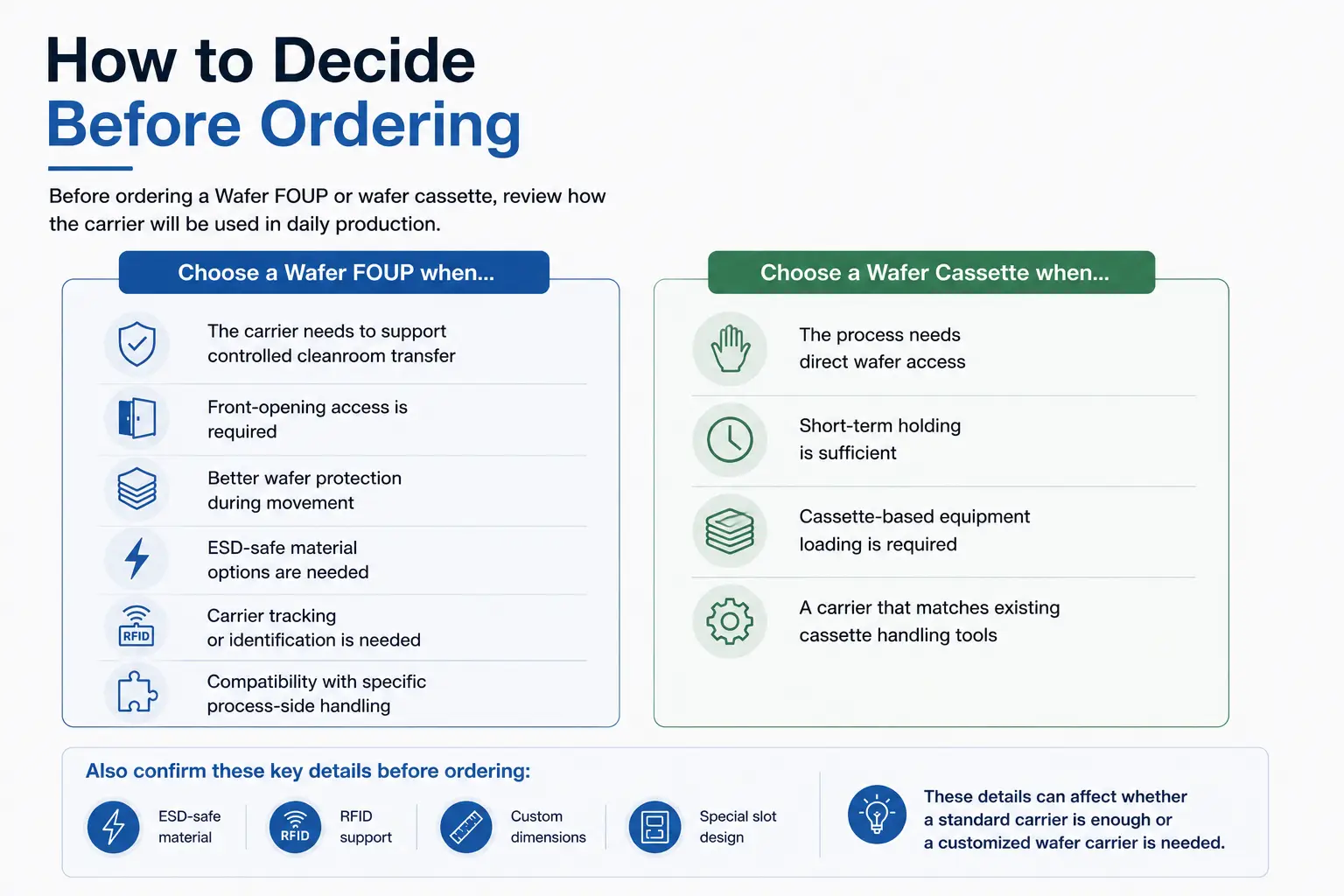
How to Decide Before Ordering
Before ordering a Wafer FOUP or wafer cassette, review how the carrier will be used in daily production.
If the carrier needs to support controlled cleanroom transfer, front-opening access and better wafer protection, a Wafer FOUP may be the better fit.
If the process needs direct wafer access, short-term holding or cassette-based equipment loading, a wafer cassette may be more practical.
Also confirm whether the carrier needs ESD-safe material, RFID support, custom dimensions or a special slot design before ordering. These details can affect whether a standard carrier is enough or a customized wafer carrier is needed.
YJ Stainless Wafer FOUP and Wafer Carrier Support
YJ Stainless provides wafer carrier solutions for semiconductor storage, cleanroom transfer and process handling applications.
For 12-inch wafer handling, the 12-Inch Wafer FOUP TJF-U12-25S is made with PC ESD material and designed with a 25-slot capacity. It is suitable for cleanroom wafer storage, wafer transport and production support.
YJ Stainless can also support custom planning based on actual process requirements, including material selection, dimensions, slot design, RFID support, equipment interface compatibility and wafer handling needs.
If you are not sure whether your process needs a Wafer FOUP, wafer cassette or custom wafer carrier, YJ Stainless can help review your handling environment and recommend a suitable solution.
Conclusion
A Wafer FOUP and a wafer cassette can both support wafer handling, but they are designed for different process needs. A Wafer FOUP is usually selected for controlled cleanroom transfer, front-opening access and better wafer protection. A wafer cassette may be suitable for direct wafer access, short-term holding or cassette-based equipment loading.
The best choice depends on the actual wafer handling process. Before ordering, confirm wafer size, slot design, access method, equipment compatibility, ESD requirement and cleanroom conditions.
If you need a 12-Inch Wafer FOUP, wafer cassette or custom semiconductor wafer carrier, contact us to discuss your wafer handling process, PC ESD material requirements and custom carrier design.
FAQ
1. What is the difference between a Wafer FOUP and a wafer cassette?
A Wafer FOUP is usually a front-opening wafer carrier used for controlled cleanroom wafer storage and transfer. A wafer cassette is a slot-based wafer holder used for wafer holding, transfer or equipment loading.
2. Is a Wafer FOUP better than a wafer cassette?
Not always. A Wafer FOUP may be better when the process requires front-opening access, controlled transfer, ESD-safe handling or better wafer protection. A wafer cassette may be better for direct access or cassette-based equipment loading.
3. Can a wafer cassette be used in a cleanroom?
Yes, depending on its material, design and process requirement. The cassette should still match the cleanroom condition, wafer size, slot design and handling method.
4. When should I choose a Wafer FOUP?
Choose a Wafer FOUP when wafers need controlled cleanroom transfer, front-opening access, better protection during movement or ESD-safe handling.
5. What should I check before choosing between a FOUP and a cassette?
Check wafer size, slot pitch, access method, equipment interface, ESD requirement, cleanroom condition and whether the carrier is used for storage, transfer or equipment loading.